














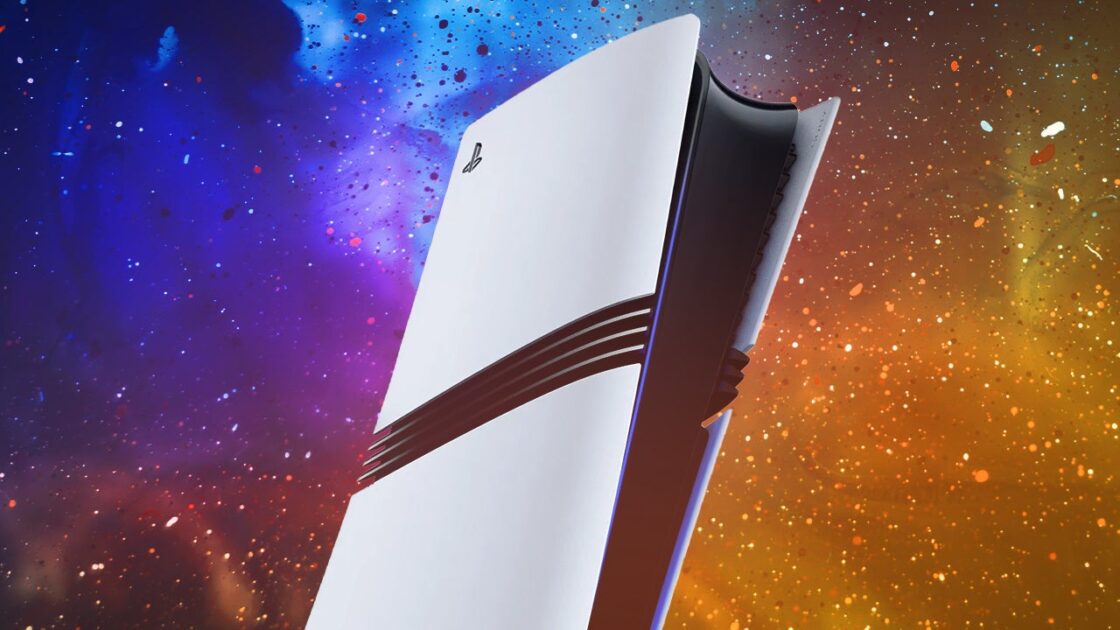

The AI-fueled chip crisis has reportedly upended Sony and Nintendo’s console plans, and may cause a delay to the release of the PlayStation 6 and a price rise for the Switch 2.
Memory is in high demand because companies like Nvidia and Google require so much of it for their AI chips, with a recent CNBC report pointing out that these companies "are the first ones in line for the components." This will likely push up RAM prices and have a knock-on impact on both console retail prices and availability.
As part of a sweeping Bloomberg report on the impact of the ongoing shortage of memory chips, its sources indicated two crucial points on PlayStation and Switch.
The first is that Sony is now reportedly considering pushing back the debut of the PS6 to 2028 or even 2029, which it described would be a “major upset” to the company’s plans. Meanwhile, Nintendo is reported to be considering raising the price of the Switch 2 this year. Neither company has issued a comment in response to the report.
But would Nintendo actually go through with a Switch 2 price rise so soon after its launch? Nintendo president Shuntaro Furukawa recently addressed the possibility of a Switch 2 price rise caused by rising prices for components and the potential impact on profitability on the hardware, saying in vague terms that he didn't think there would be any impact any time soon. “We do not disclose details regarding individual components, but we can say that we are working to secure stable supplies of memory components by holding discussions from a long-term perspective with our business partners,” Furukawa explained.
“As a result, the recent rise in memory prices did not have a significant impact on hardware profitability in the third quarter. In addition, we do not expect any significant impact in the fourth quarter. However, if this rise in component prices lasts longer than expected and runs through the next fiscal year and beyond, it may put pressure on profitability. If the situation deteriorates significantly, we will carefully assess market trends and respond.
“As for any future change in the price of Nintendo Switch 2 hardware, no decision has been made at this time. Any decision to change the price will be determined comprehensively, taking into consideration not only profitability, but also other factors like the platform’s installed base, sales trends, and the market environment.”
Furukawa was then asked if Nintendo would consider selling the Switch 2 at a loss in a bid to expand the console’s install base. “The current rise in memory prices is happening at a pace that exceeds our expectations,” he said. “In general, the profitability of hardware tends to improve with economies of scale, and we want to continue to reduce costs as much as possible through mass production of Nintendo Switch 2 hardware.
“With regard to not selling hardware at a loss, what we are focusing on is profitability on a global basis. There are various external factors, such as fluctuations in exchange rates, but looking at the global picture, we have traditionally tried to avoid situations where individual units are sold at a loss as much as possible.
“It is difficult to predict the changes in the external environment that are currently taking place, but I think it is not an appropriate approach to be excessively influenced by short-term trends. The second and third years for Nintendo Switch 2 are very important, and if we can expand the hardware installed base, we can use that as a basis to greatly expand software sales. We will take this into account when making business decisions and flexibly consider various options.”
Also earlier this month, Sony waved away concern about potential further PlayStation 5 price rises as a result of the rising cost of memory, insisting it’s already in a position to secure the minimum quantity necessary to manage the year-end selling season of its next fiscal year.
“Going forward, we intend to further negotiate with various suppliers to secure enough supply to meet the demand of our customers,” Lin Tao, Sony’s chief financial officer, said. “Given the stage of our console cycle, our hardware sales strategy can be adjusted flexibly and we intend to minimize the impact of the increased memory cost on this segment going forward by prioritizing monetization of the install base to date and striving to further expand our software and network service revenue.”
In January, an analyst report suggested that Sony may push the launch of the PS6 beyond 2028 and lengthen the PS5 lifecycle. David Gibson, senior analyst at MST international who focuses on game and tech companies, predicted that “rising memory prices will not impact short-term performance thanks to Sony’s existing inventory.” However, he noted that increased memory costs could become an issue for Sony in the next fiscal year (ending in March 2027), saying “Sony might pass future cost increases onto consumers.”
Wesley is Director, News at IGN. Find him on Twitter at @wyp100. You can reach Wesley at [email protected] or confidentially at [email protected].