
















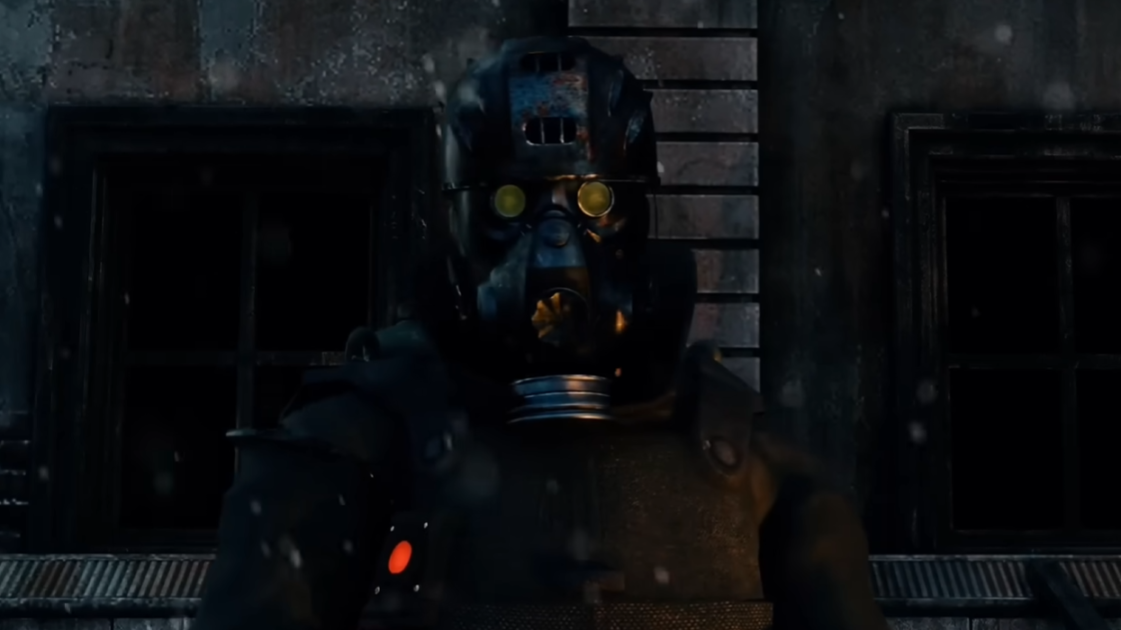

With perfect timing, the modders behind the Van Buren remake in Fallout: New Vegas have released a new teaser trailer.
UnitedWestTeam released the teaser, which sets up Fallout: The New West, the fan-made total conversion mod for Fallout: New Vegas inspired by Fallout: Van Buren, the cancelled Fallout 3 that was in development at Black Isle Studios in the early 2000s before the franchise moved over to Bethesda.
Why is this well-timed? Because Van Buren would have been set in post-apocalyptic Colorado, which is exactly where Amazon’s Fallout TV series is headed for Season 3.
Fallout: The New West aims to adapt the core narrative threads of Van Buren and turn them into a fully playable story built in the New Vegas engine. Expect modern gameplay systems, expanded roleplaying opportunities, and “the mechanical depth and tone that defined classic Fallout,” the modders said.
Here’s the official blurb:
It sounds exciting, and given the success of Fallout: London, which had Bethesda’s blessing, it may even have a chance of survival. Indeed, a new demo is apparently due out soon (an initial demo, which released under the name Fallout Revelation Blues, came out last year). This alternate start demo under the new name of Fallout: The New West will be followed up with the entirety of Act 1 of the game as a vertical slice, the modders said.
If Fallout: The New West does make it to release, it will see Van Buren realized — albeit in fan-made form — 20 years after it fell by the wayside. In 2024, Fallout creator Tim Cain revealed new information on how it ended up canceled amid significant financial problems at Interplay.
Cain, who worked on the first two, much-loved Fallout games in the mid-to late 90s before leaving Interplay to start a new studio called Troika Games, revealed that in the middle of 2003, an unnamed Interplay vice president asked him to play the Van Buren prototype, saying: “I don’t think they can get it done, so I’m just going to cancel it. But if you look over it and give me an estimate there’s a chance I wouldn’t cancel it.”
Cain said he played the prototype for two hours and asked the development team a number of questions before delivering his verdict to the vice president. “I said, ‘I’m convinced in 18 months you could have a really good game shipped.’ And he said, ‘huh, could it be done any faster?’ And I was like, 'oh, shoot, I’ve said too long.' I said, ‘well, even if you did a death march crunch I don’t think you could do it faster than 12, and then you’d be shipping something that was unbalanced and buggy, and the team would be destroyed. So I don’t recommend that.’
“And he said, ‘OK, thanks.’ As we walked out he basically explained any answer over six months was going to result in him having to cancel it, meaning the answer I just gave got the game canceled. But he was going to cancel it anyway. He thought it couldn’t be done in six months, and I just confirmed that to him.”
According to Cain, the cancellation of Van Buren was, ultimately, about money; Interplay’s dire financial situation meant it simply did not have enough cash to fund more than six months of further development. Interplay went on to close Black Isle Studios and cut its entire staff. The company released the console spinoff Fallout: Brotherhood of Steel in 2004 for the Xbox and PlayStation 2, but it was not enough. That same year, Interplay announced a licensing deal with The Elder Scrolls developer Bethesda for future Fallout games, and in 2007, Interplay sold the Fallout IP to Bethesda outright. The rest is history.
And if you’re wondering about the Fallout TV show’s journey to Colorado, check out what co-showrunner Geneva Robertson-Dworet and even Todd Howard himself have had to say about it.
Wesley is Director, News at IGN. Find him on Twitter at @wyp100. You can reach Wesley at [email protected] or confidentially at [email protected].