














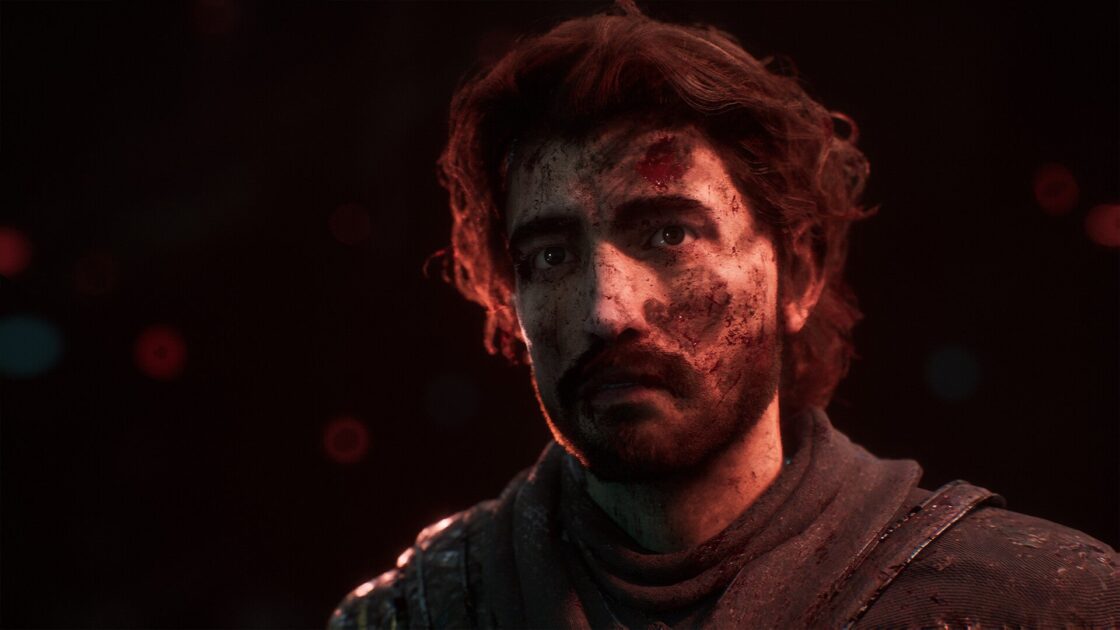

Fresh from receiving the Game of the Year award at The Game Awards 2025, Clair Obscur: Expedition 33 has been stripped of two awards from the Indie Game Awards after its use of generative AI hit the headlines.
Sandfall Interactive’s record-breaking role-playing game launched with some placeholder textures built with generative AI. The developer patched them out five days after release, insisting they made the cut by mistake. This went under the radar until recently, when comments from Sandfall co-founder and producer François Meurisse reemerged.
Speaking to El País for an article published in July, Meurisse said: “We use some AI, but not much. The key is that we were very clear about what we wanted to do and what to invest in. And, of course, technology has allowed us to do things that were unthinkable a short time ago. Unreal Engine 5’s tools and assets have been very important in improving the graphics, gameplay, and cinematics.”
Meurisse’s comment resurfaced amid a backlash to comments from Larian boss Swen Vincke in the wake of the developer’s high-profile announcement of Divinity at The Game Awards. The original news came from a Bloomberg interview in which Vincke said that Larian was "pushing hard" [Bloomberg's phrasing] on generative AI, even though it hasn't led to big gains in efficiency. Specifically, the studio was said to be using the technology to "explore ideas, flesh out PowerPoint presentations, develop concept art and write placeholder text." [again, Bloomberg's phrasing].
Vincke later addressed the backlash, and has promised an AMA to answer questions from fans. All the while, a light has been shone on Clair Obscur, which leads us to the Indie Game Awards.
Clair Obscur had won Game of the Year and Debut Game from the Indie Game Awards, but both awards are now retracted. Explaining the decision, the Indie Game Awards said:
Each award went to the next highest-ranked game in its respective category; Sorry We’re Closed now has Debut Game, and Blue Prince now has Game of the Year.
Meanwhile, El País has updated its original article to include a statement from Sandfall clarifying its use of generative AI in the making of Clair Obscur:
And here’s Vincke's latest statement in full:
Excellent, the AI generated textures in Clair Obscur were indeed placeholders and were replaced with custom assets. The other AI generated poster that was present in the starting area (don't have a screenshot of it now) was also removed. https://t.co/UQbfLuyj8e pic.twitter.com/5xgqsCmZpC
The use of generative AI in video game development is one of the hottest topics in the industry. Last month, we reported that Assassin's Creed publisher Ubisoft was forced to remove an image found within Anno 117: Pax Romana that contained AI-generated elements after fans complained, and Call of Duty: Black Ops 7 players took to social media to complain about AI-generated images they had found across the game, following a trend of AI-Ghibli images from earlier this year.
The Alters developer, 11 Bit Studios, and Jurassic World Evolution 3 developer, Frontier Developments, meanwhile, similarly faced fan backlash when they were caught using undisclosed AI images. EA CEO Andrew Wilson has said AI is "the very core of our business," and Square Enix recently implemented mass layoffs and reorganized, saying it needed to be "aggressive in applying AI." Dead Space creator Glen Schofield also recently detailed his plans to “fix” the industry in part via the use of generative AI in game development, and former God of War dev Meghan Morgan Juinio has said: "… if we don’t embrace [AI], I think we’re selling ourselves short.”
As the debate around the use of generative AI to build video games rages on, Tim Sweeney, boss of Fortnite developer Epic Games, has waded in to call on Valve to ditch its AI Generated Content Disclosure for Steam games.
Valve’s rules mean developers must disclose their use of AI-generated content on a game’s Steam store page. For example, the Steam page for Embark Studios’ Arc Raiders includes a note from the developer on how the game uses AI-generated content: “during the development process, we may use procedural- and AI-based tools to assist with content creation. In all such cases, the final product reflects the creativity and expression of our own development team.”
Wesley is Director, News at IGN. Find him on Twitter at @wyp100. You can reach Wesley at [email protected] or confidentially at [email protected].